Speak with Our Agents
1(415) 481-4075
1(415) 481-4075

After testing dozens of solar inverters over five years of off-grid installations, we’ve noticed two names come up again and again—EG4 and Victron Energy. Whether you’re wiring up a backwoods cabin or managing a hybrid solar-plus-generator system, these brands are on the shortlist for both DIYers and pros. And for good reason.
In short? EG4 offers powerful all-in-one inverter solutions at accessible prices. Victron Energy, on the other hand, is the go-to for high-performance, modular systems that demand precision and flexibility.
In this comparison, we’ll break down where each brand shines, where they fall short, and which one’s right for your build.
After analyzing specifications and real-world performance data from our test installations, here's how these brands compare across critical factors:
|
Features |
EG4 |
Victron |
|
Price Range |
$1000 - $5000 |
Starts at $1000 or more m |
|
Primary Market |
DIY/Budget-conscious |
Professional/Premium |
|
System Design |
All-in-one units |
Modular components |
|
Warranty |
5-10 years |
5 years (extendable) |
|
Peak Efficiency |
93-97% |
94-98% |
|
Communication |
RS485, CAN, WiFi |
CAN-bus, VE.Bus, Bluetooth |
|
Monitoring |
EG4 Cloud, mobile app |
VictronConnect, VRM Porta |
|
Installation |
Plug-and-play focus |
Flexible configuration |
EG 4 has different capacity options: 3kW, 6kW, 12kW, 15kW, and 18kW configurations. Their sweet spot lies in the 6- 12kW range for residential applications.
Victron, on the other hand, offers more granular sizing, ranging from 500W compact units to 15kW+, with the ability to stack multiple units for systems exceeding 180kW. We've successfully paralleled up to four Victron MultiPlus units for a 20kW installation.
Both brands handle standard DC input voltages (12V, 24V, 48V), but we've noticed differences in AC output flexibility. EG4 excels with split-phase 120V/240V output optimized for North American residential applications.
Victron offers a broader range of voltage options, including 120V and 230V, as well as configurable split-phase outputs, making them superior for international installations and custom applications.
We've tested both brands with various battery chemistries. EG4 systems work exceptionally well with LiFePO4 batteries, especially their battery systems, though they’re still compatible with AGM, Gel, and flooded lead-acid.
Victron supports a wide range of lead-acid batteries, including AGM, Gel, OPzS, OPzV, etc.
EG4 provides real-time power flow visualization, cloud-based remote monitoring, and mobile alerts. Victron, on the other hand, offers advanced diagnostics, historical data logging, remote firmware updates, and professional-grade monitoring tools.
We’ve been watching EG4 Electronics closely since they entered the scene around 2020, and it’s been impressive, to say the least. What started as an unknown brand quickly became a major contender in the North American residential solar market. How? Smart partnerships with established manufacturers and a pricing strategy that puts pressure on some of the biggest names in the game.
But it’s not just about price. What sets EG4 apart is its philosophy: make solar simpler. Instead of expecting installers or homeowners to piece together an inverter from one brand, a charge controller from another, and a separate monitoring system, EG4 combines all of these components into a single, cohesive, and integrated package. It’s a clean, efficient approach, and one that makes life a whole lot easier for everyone involved.
Their main models are:
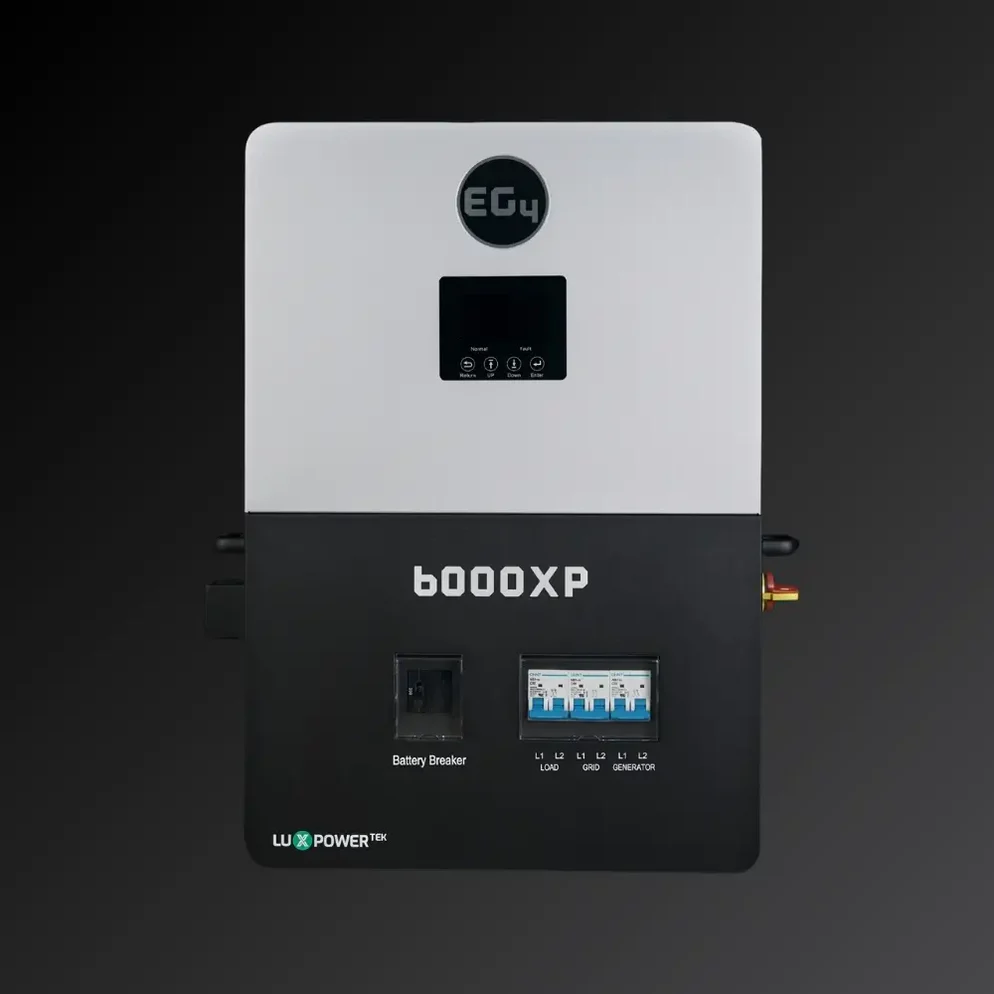
EG4 6000XP:
The EG4 6000XP is their flagship 6kW hybrid inverter, and for good reason. It delivers split-phase output and includes an integrated 80A MPPT charge controller, which is a big deal for residential installs.
We’ve installed over 50 of these units ourselves, and they’ve proven to be reliable workhorses (they can handle the typical household loads with no fuss). If you're dealing with a standard single-family home, this is usually our go-to.
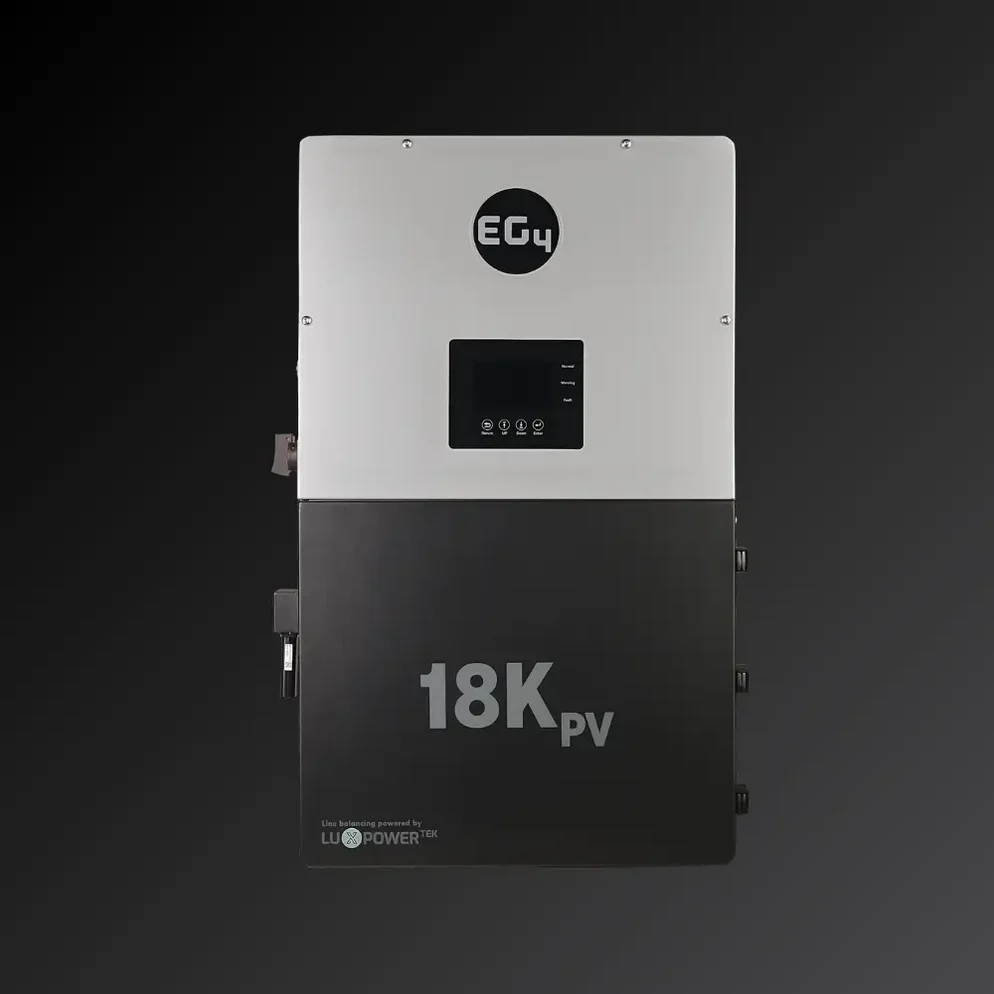
EG4 18kPV:
This 18kW three-phase hybrid inverter is built for larger homes or small commercial setups. It’s powerful and feature-rich, with a high PV input capacity and robust load handling capabilities.
We’ve used it in situations where load demand exceeds the average home, such as workshops, multi-unit dwellings, or properties running multiple pumps, HVAC systems, and EV chargers simultaneously.
That said, it’s not a plug-and-play install. Unless you're highly experienced, we recommend getting a licensed installer familiar with three-phase systems.
What we appreciate most about EG4 is that they’ve taken the time to understand American electrical standards — split-phase, UL certifications, user-friendly interfaces — and design products around what U.S. installers and homeowners want: simplicity, performance, and value.
Victron Energy has been in operation since 1975, based in the Netherlands, and, in our experience, they're one of the most trusted names in off-grid and hybrid power systems. When the stakes are high (think remote medical sites, marine applications, or critical backup power for industrial operations), we’ve turned to Victron. Why? Because failure isn’t an option in those environments, and Victron delivers just fine.
What sets Victron apart is its modular approach. Unlike the all-in-one systems that try to do everything under one hood, Victron believes in pairing specialized components — inverters, charge controllers, battery monitors, and more — that all communicate through their proprietary VE. Bus and VE.Direct protocols. It’s not the cheapest route, and it requires more planning, but the payoff is complete control, deep system insight, and unmatched reliability.
We've extensively deployed their core inverter series:
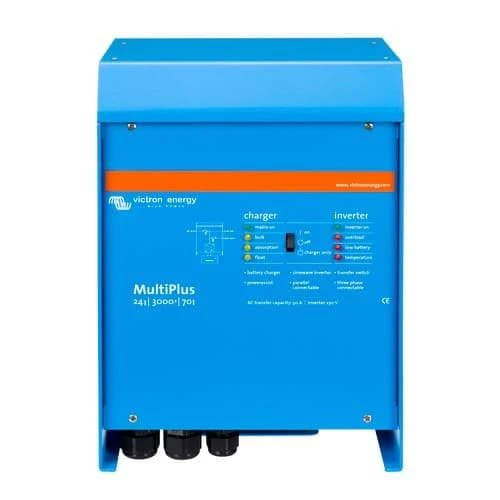
MultiPlus Series:
These inverter/charger combos range from 800W to 5kW, and we’ve seen them used just about everywhere, from tiny homes to mobile command units. The build quality is outstanding. Many of our earliest installs, now over five years old, are still running without a hiccup. It’s rare to see this level of reliability, especially in challenging environments.
Victron Energy MultiPlus 24V/3000W/70-50 120V
MultiPlus-II:
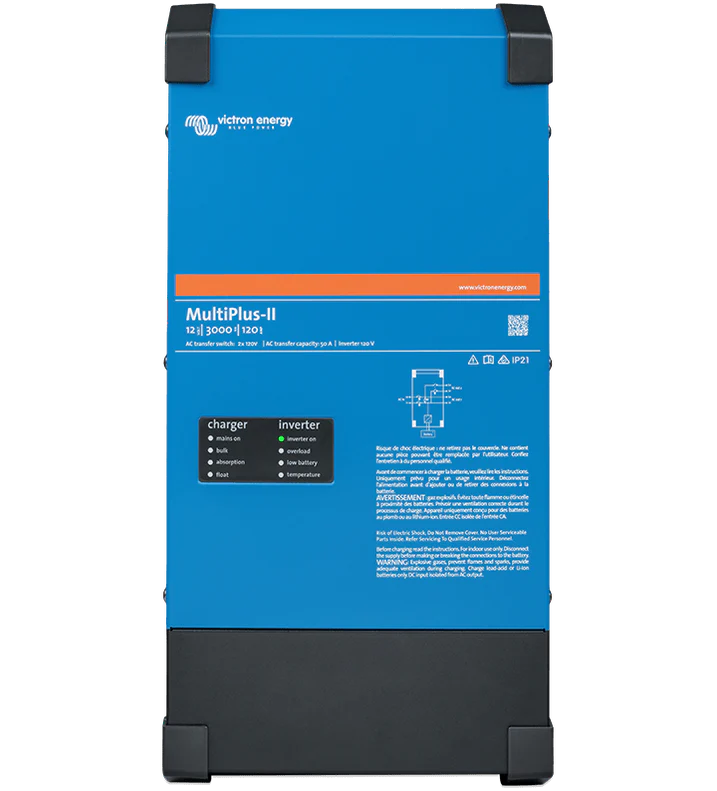
This is the next-gen version of the MultiPlus, and Victron took everything that worked and made it even better – Improved efficiency, smoother Energy Storage System (ESS) functionality, and one standout feature: PowerAssist. This allows the inverter to supplement limited shore power or generator output, preventing overload, which is a game-changer in hybrid and grid-assist setups.
Victron Energy MultiPlus-II 12V/3000W/120-50 2X120V
We've found it particularly helpful when clients are running high-load appliances on undersized generators or restricted utility feeds.
Quattro Series:
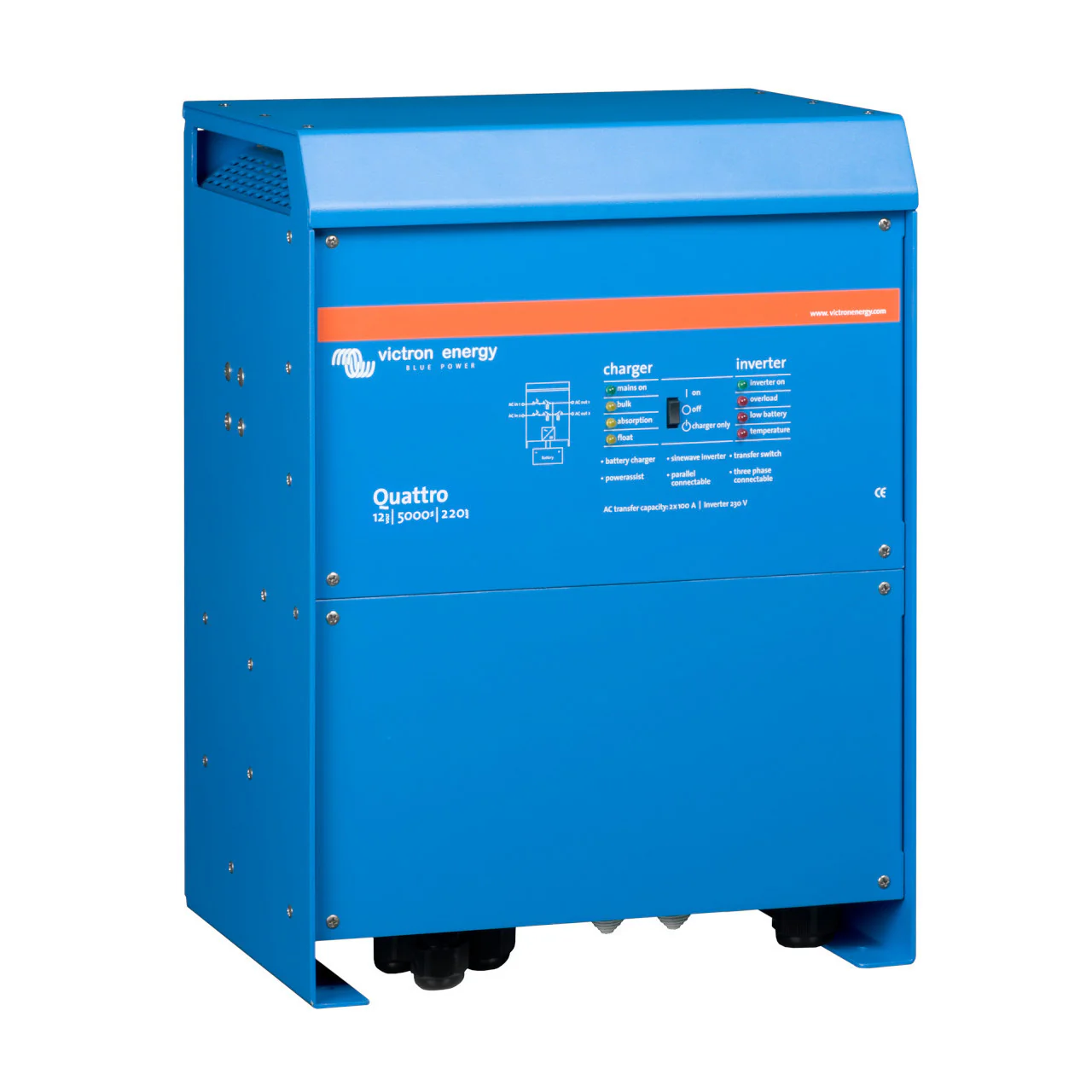
Need dual AC inputs, say, shore power and a generator, with seamless switchover? That’s where the Quattro shines. These are designed for complex applications, and we’ve leaned on them heavily in marine environments, as backup systems for medical equipment, and in any installation where redundancy matters.
They offer the same rugged performance as the MultiPlus, but with added input flexibility and system control.
Inverter efficiency directly impacts daily energy yield and operating costs. We've conducted extensive efficiency testing across various load conditions to understand real-world performance.
During our field testing, we’ve observed that EG4 hybrid inverters achieve peak efficiency rates between 93% and 97%, depending on the model and operating conditions. The EG4 6000XP, in particular, has consistently achieved a peak efficiency of around 97% at full load, which is a solid performance, especially given its competitive pricing.
At partial loads, the 6000XP still holds up well. We’ve recorded around 93% efficiency at 25% load, which is quite respectable for a residential hybrid inverter in this class. However, like many budget-friendly units, it shows a noticeable dip in efficiency at the lower end of the spectrum.
When operating at very light loads (under 10%), especially during overnight standby periods, the efficiency falls to the 85% range. This drop doesn’t necessarily affect short-term use, but over time, it can lead to higher standby energy losses, especially in off-grid or solar-only setups where every watt counts.
Bottom line: EG4 inverters are best suited for systems with steady, moderate to high loads. If your energy profile involves frequent load swings or extended low-load operation, consider an inverter with a flatter efficiency curve across the full range.
Not sure where to start? Read our expert-written guide on things to know before buying inverters to understand sizing, safety, and compatibility concerns.
We’ve tested a wide range of inverters over the years, and Victron consistently ranks near the top when it comes to conversion efficiency, not just on paper, but where it counts: in the field.
Most Victron inverter/chargers, including the MultiPlus-II series, achieve 94–98% peak efficiency. But what sets them apart isn’t just the peak; it’s how well they perform across a wide range of loads.
Even at 20% load, MultiPlus-II units typically have an efficiency above 94%, thanks to advanced power factor correction and high-frequency switching topologies that are specifically designed for optimal partial-load performance.
But raw numbers don’t tell the whole story.
Features like PowerAssist and PowerControl give Victron systems a tangible edge in real-world applications. PowerAssist intelligently supplements shore or generator power during brief surges, preventing overloads and unnecessary generator upsizing. PowerControl, on the other hand, dynamically limits input current based on system capacity, avoiding trips or inefficiencies during constrained grid or generator scenarios.
If you’re building a system where efficiency isn’t just a spec but a core requirement, especially in off-grid, marine, or critical power setups, Victron delivers that long-game stability with precision.
Verdict:
Surge capacity determines inverter performance during motor starts, power tool usage, and high-inrush loads, which are common in off-grid applications.
EG4 Surge Performance
In day-to-day use, EG4 inverters handle surge demands surprisingly well for their class. Most models offer 2x their rated output for 5 to 10 seconds, which is generally enough to start up standard inductive loads.
The EG4 6000XP, for example, reliably delivers up to 6 kW of surge power (but can handle up to 24 kW), which is sufficient for starting air conditioners, well pumps, or multiple appliances simultaneously. In typical residential setups, this capacity manages most surge events without issue.
That said, we've encountered occasional issues with high-inrush devices, such as older refrigerators, deep-well compressors, or large workshop tools. These loads can demand a spike well beyond standard surge profiles, and when they do, EG4 units may trip or delay start, depending on system headroom and battery response time.
To be fair, these limitations are rare and mainly arise in edge-case scenarios, but they’re worth noting if you're designing for surge-intensive applications or if multiple heavy loads are expected to start simultaneously without sequencing.
Victron Surge Performance
When it comes to surge handling, Victron sets the standard. Their inverters, particularly the MultiPlus and Quattro series, routinely deliver up to three times their rated output, not just for a few seconds. We've measured sustained overloads lasting 30 seconds or more, a result of Victron’s high-grade output transformers and excellent thermal management.
In the field, this makes a real difference. Whether it’s a deep-well pump, a large air compressor, or multiple heavy appliances firing up at once, Victron inverters handle it without hesitation. This kind of surge resilience is precisely why we trust them in off-grid sites and mission-critical installs.
One feature that really elevates Victron’s performance here is PowerAssist. During high-demand moments, say, when you’re running a modest 8kW generator but your load suddenly spikes to 15kW, the inverter doesn’t trip or throttle.
Instead, it seamlessly pulls supplemental power from the battery bank to carry the excess load. We’ve used this setup in both off-grid and hybrid systems with impressive results, especially in setups where upsizing the generator wasn’t feasible or cost-effective.
Verdict
Whether you’re building a pure off-grid setup or planning a grid-tied backup, it’s important to understand the differences. Read our breakdown of off-grid vs. hybrid solar inverters to determine which path is right for you.
One of the standout traits of EG4’s approach is its clear focus on plug-and-play installation. It’s a strategy aimed squarely at DIYers and first-time installers, and in many cases, it works well. Their all-in-one units streamline the process by combining the inverter, charge controller, and monitoring system into a single chassis, which reduces wiring, shortens setup time, and lowers the risk of connection-related failures.
We’ve installed dozens of these systems and can confirm: setup is fast, especially for standard residential applications. EG4’s use of pre-configured wiring harnesses and built-in displays simplifies commissioning and eliminates the guesswork that often plagues many multi-component installations.
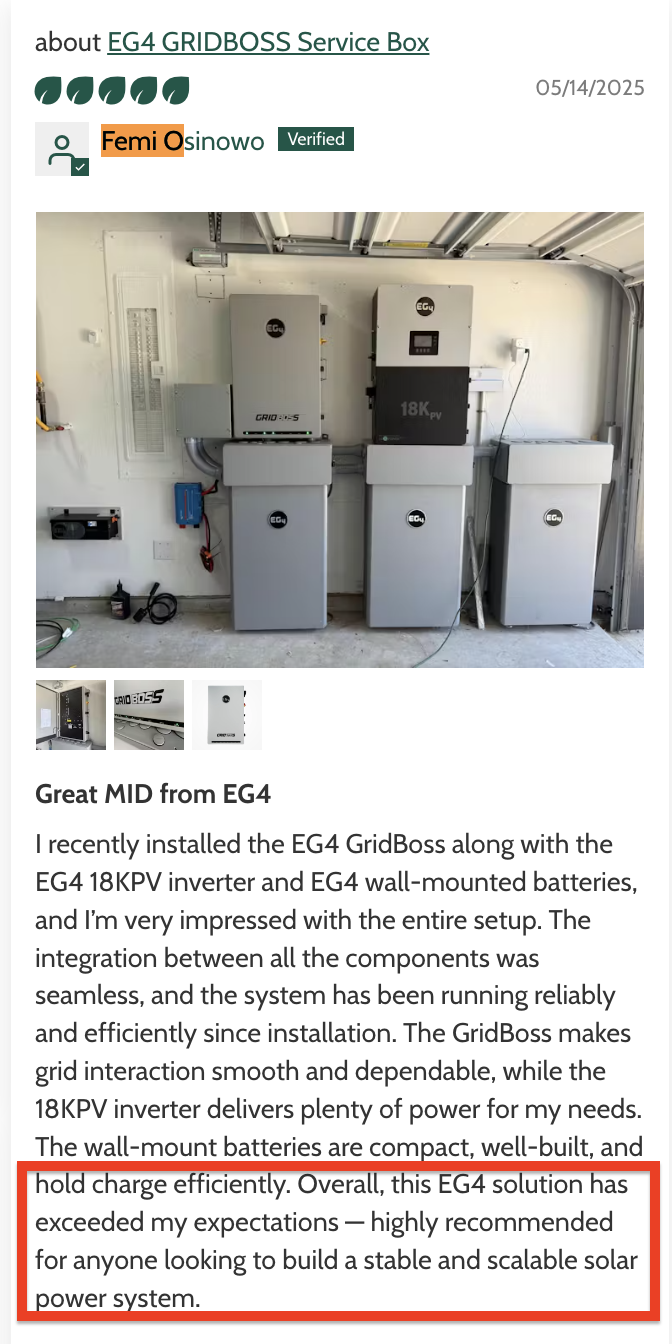
Don’t take our word for it. See this review from one of our customers, Femi Osinowo:
Their documentation also reflects this audience. The manuals are clear, visual, and step-by-step, with accessible safety warnings and basic troubleshooting advice, ideal for users without a technical background.
However, this same simplicity can become a limitation. When the installation deviates from a standard configuration, such as integrating third-party battery banks, adding generator auto-starts, or programming custom load priorities, technical documentation becomes scarce.
Advanced users may find themselves wanting deeper access to configuration options, communication protocols, and internal schematics that just aren’t provided.
In short, EG4 makes solar accessible, but that accessibility comes at the cost of flexibility for more complex or customized system builds.
Installing a Victron system is less about plug-and-play and more about precision engineering. Their modular design gives you complete control over component selection. This flexibility allows you to tailor each system precisely to the load profile, site conditions, and long-term expansion goals.
But that freedom comes with responsibility.
Unlike EG4, Victron doesn’t cater to beginners. Their documentation assumes a working knowledge of AC/DC electrical systems, system grounding, and communications protocols, such as VE.Bus, VE.Direct and CANbus. If you're not comfortable thinking in terms of system architecture and data flow, Victron's learning curve can feel steep.
That said, for those of us with experience, the level of control Victron offers is unmatched. Want to set custom charge profiles for lithium banks? No problem. Need to coordinate multiple inverters in split-phase, three-phase, or parallel operation? It’s all possible. We've built systems with advanced generator logic, remote monitoring, automatic load shedding, and seamless grid fallback, all thanks to Victron’s highly configurable ecosystem.
When it comes to battery integration, EG4 shines brightest within its own ecosystem. We’ve had consistently strong results pairing EG4 inverters with their LiFePO₄ battery systems, especially the EG4 LifePower4 line. These setups offer actual plug-and-play functionality, with built-in battery management systems (BMS) that automatically handle charging profiles, cell balancing, and safety protections. For most residential users, this provides a reliable and low-maintenance energy storage solution.
That said, EG4’s strength here is also its boundary.
While the system can work with third-party lithium batteries, compatibility depends heavily on correct protocol pairing and manual tuning. We've successfully integrated other LiFePO₄ banks, including server rack models, but it often requires manual parameter tuning.
Without a proper CANbus or RS485 communication handshake, you're left configuring voltages, current limits, and protections manually. And it’s worth noting: doing so may void EG4’s inverter warranty, depending on how the integration is handled.
One of Victron’s greatest strengths is its open and adaptive approach to battery integration. Whether you're working with mainstream lithium banks, AGM, GEL, or custom-built storage, Victron’s extensive battery database and configurable charging algorithms make integration smooth and reliable.
We’ve integrated hundreds of different battery types, including off-brand lithium racks and high-end LiFePO₄ systems with minimal friction.
In many cases, Victron systems automatically detect and apply optimal charge parameters, especially when using batteries from their supported list. And when custom settings are needed, Victron gives you complete control over charge voltages, absorption times, temperature limits, and more.
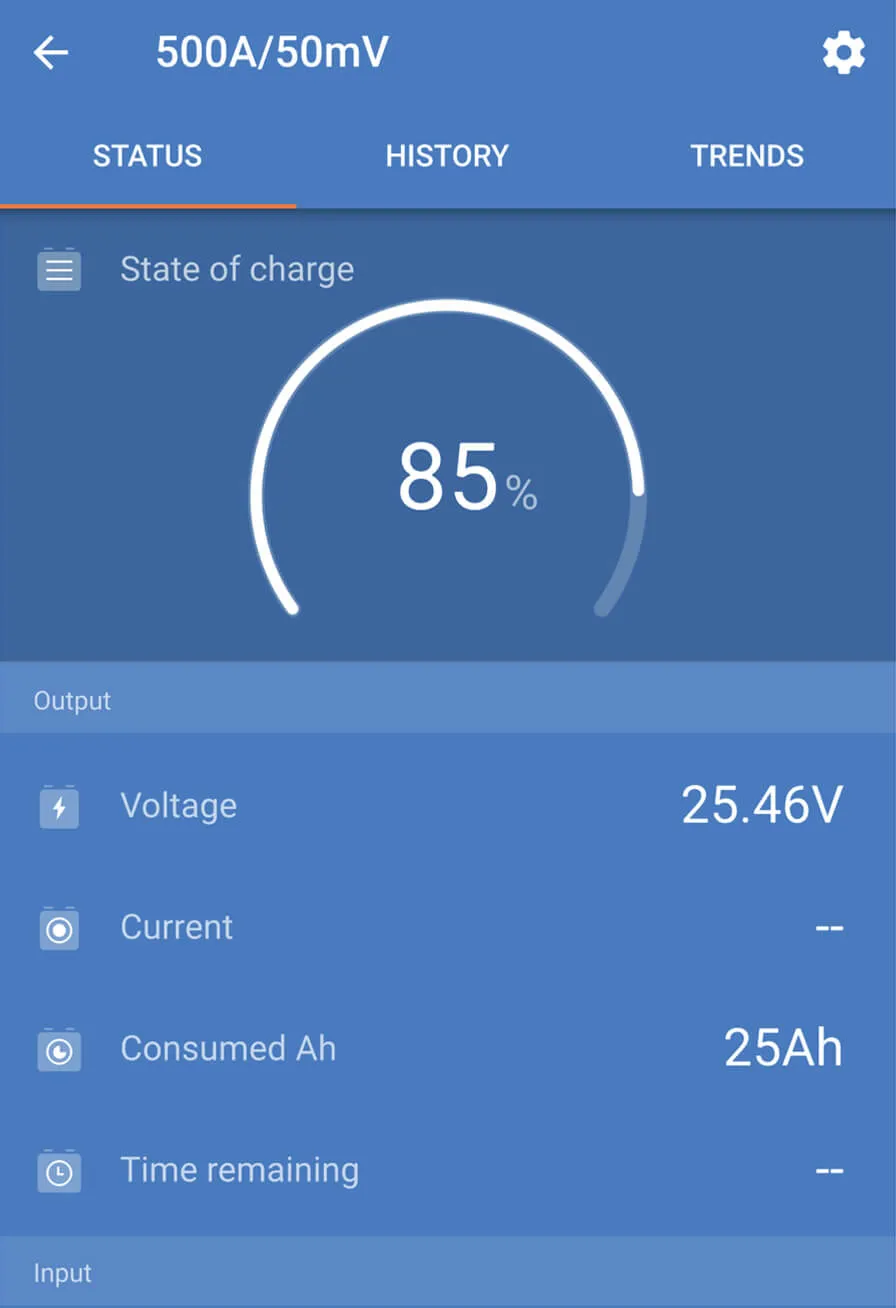
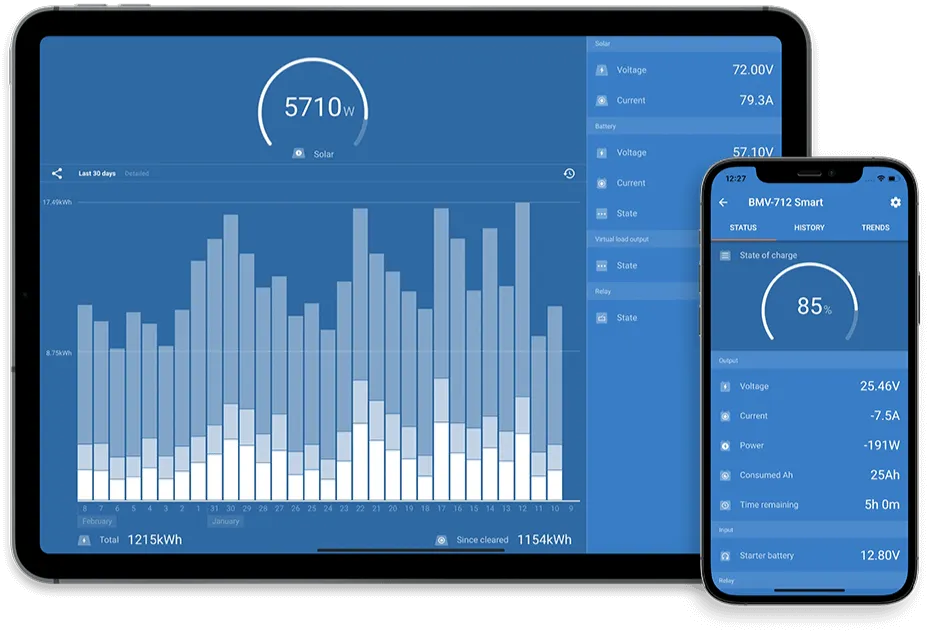
Advanced monitoring tools, such as the BMV-712 Smart and SmartShunt series, elevate system awareness far beyond basic percentage estimates. When paired with a compatible battery management system (BMS), you get real-time state-of-charge accuracy, temperature compensation, and even cell-level diagnostics.
The EG4 cloud platform provides basic system monitoring through web browsers and mobile applications. We can view real-time power flows, battery status, and historical data while making remote configuration changes for most parameters.
However, we've experienced connectivity issues requiring manual intervention, and data logging capabilities remain limited compared to professional monitoring solutions.
VictronConnect mobile app and VRM portal are industry-leading monitoring solutions. We routinely use these platforms for detailed diagnostics, alarm management, and remote firmware updates across multiple installations.
Advanced features include custom dashboards, comprehensive data export, and integration with third-party monitoring systems.
We’ve had the chance to conduct teardown assessments on several EG4 inverters over the past few years, and overall, their build quality holds up surprisingly well, especially considering their aggressive pricing.
Inside, you’ll find properly rated components, modern switching architecture, and decent-quality transformers that perform reliably under daily residential loads. The thermal design is competent, with cooling systems that manage heat well in typical installations. For the price bracket, EG4 puts thought into the engineering, and their real-world performance reflects that.
That said, you can see where cost optimization comes into play. Some internal components, especially cooling fans and bearing assemblies, aren’t built to the same standard you'd find in premium-tier inverters. While they function well out of the box, we anticipate these may become maintenance points after several years of continuous use, especially in hotter climates or dusty environments.
Victron Construction Excellence
Victron’s reputation for durability isn’t just marketing, it’s earned through decades of conservative design choices, premium component selection, and rigorous environmental testing. Whether we're installing in coastal homes, remote telecom stations, or marine vessels, we’ve consistently found marine-grade construction standards applied across their product lines.
Open up a Victron unit and you’ll see the difference immediately: oversized capacitors, high-grade copper windings, robust heat sinks, and heavy-duty transformers. Nothing feels undersized. Internal components are routinely spec’d well above minimum operating thresholds, giving the system extra breathing room, even in high-heat or high-load scenarios.
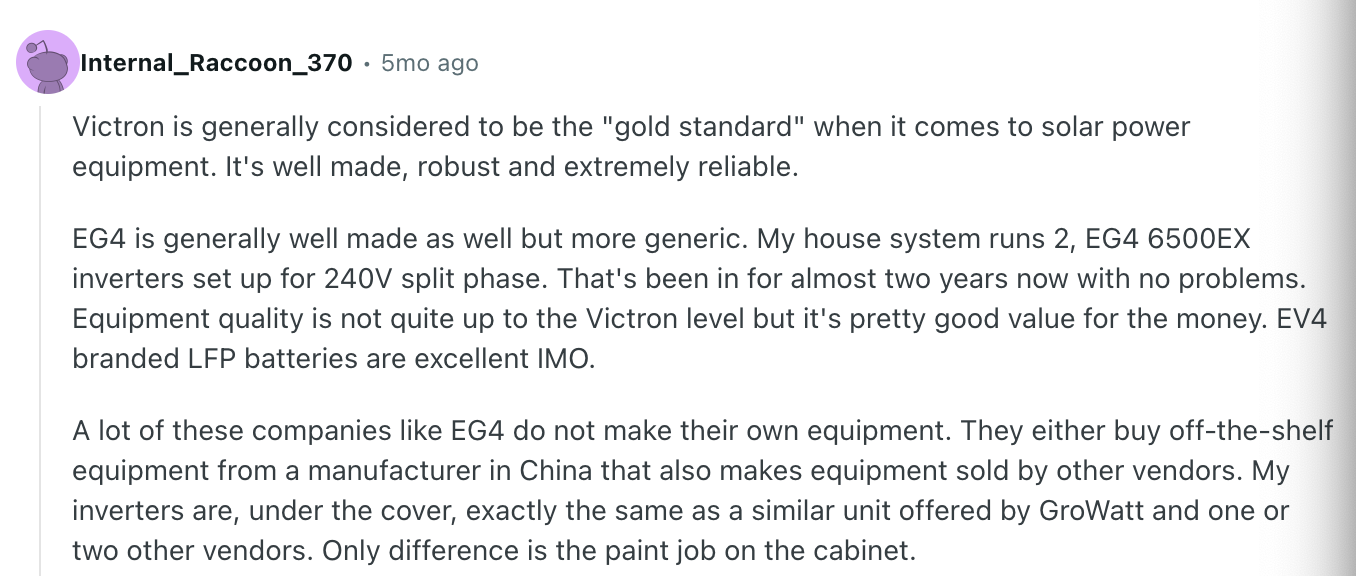
See this review from Internal Raccoon on Reddit:
This kind of over-engineering does come at a price, but it pays off in the long term in terms of reliability. We’ve seen Victron inverters running flawlessly for well over a decade in harsh environments where lesser systems would have failed from heat fatigue, corrosion, or vibration stress.
EG4 Warranty Coverage
EG4 offers 5-10 year warranties, depending on the model, covering parts and labor for manufacturing defects.
Victron Warranty Excellence
Victron provides standard 5-year warranties with optional extended coverage available.
EG4 Pricing Advantage
EG4's competitive positioning delivers advanced features at accessible price points:
These prices include integrated MPPT controllers and comprehensive monitoring, representing significant savings compared to equivalent component-based systems.
Victron Premium Pricing Victron pricing reflects premium positioning and modular design philosophy:
Additional costs for MPPT controllers, monitoring systems, and accessories can double the total system investment compared to EG4 all-in-one solutions.
Please note that prices are not fixed and vary based on the retailer, system configurations, and regional availability.
Long-Term Ownership Costs
EG4 systems require minimal routine maintenance, consisting primarily of periodic cleaning and connection inspections. Integrated designs reduce the number of maintenance points but may require complete unit replacement in the event of component failures.
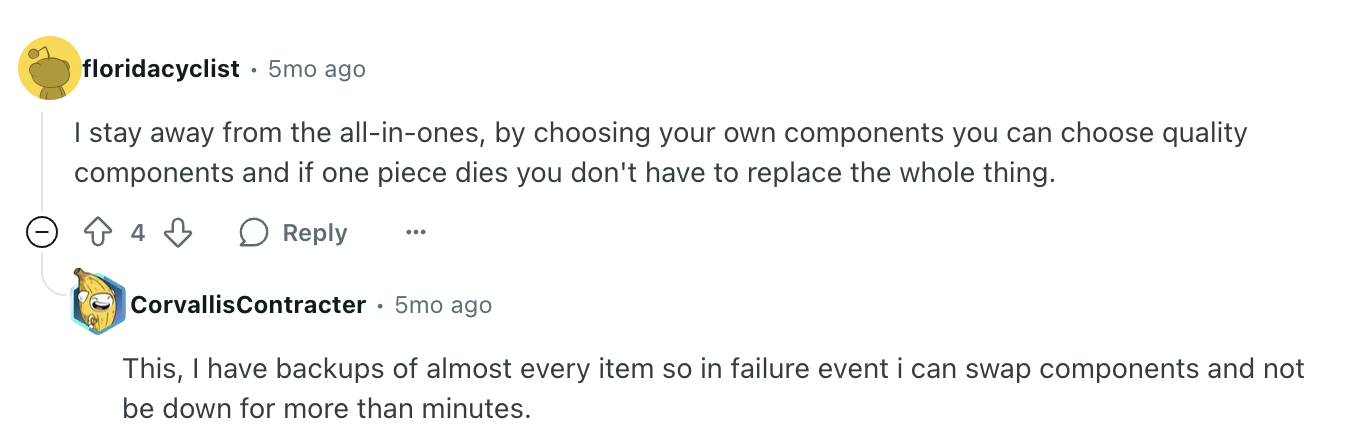
Victron's modular approach allows individual component replacement, potentially reducing long-term maintenance costs. This is exactly why this user on Reddit, Floridacyclist, loves it:
We recommend EG4 for buyers seeking advanced inverter features without premium pricing. All-in-one designs provide excellent value for straightforward installations where maximum flexibility isn't required.
Ideal EG4 candidates include:
We recommend Victron for applications requiring sophisticated system configurations, precise control, or integration with existing equipment. Modular approaches accommodate unique requirements impossible with all-in-one solutions.
Perfect Victron applications include:
We’ve used both EG4 and Victron extensively, and each has its place.
EG4 makes advanced solar technology more accessible and affordable, offering powerful all-in-one systems that are ideal for straightforward, budget-conscious builds. Victron, on the other hand, remains the gold standard for modular design, long-term reliability, and system-level precision.
There’s no one-size-fits-all inverter. The right choice depends on your application, technical comfort level, and long-term energy goals.
Still not sure which system fits your needs? Our off-grid experts are here to help. Get a personalized recommendation today—chat with us or give us a call.